How do scientists count wild giant pandas?
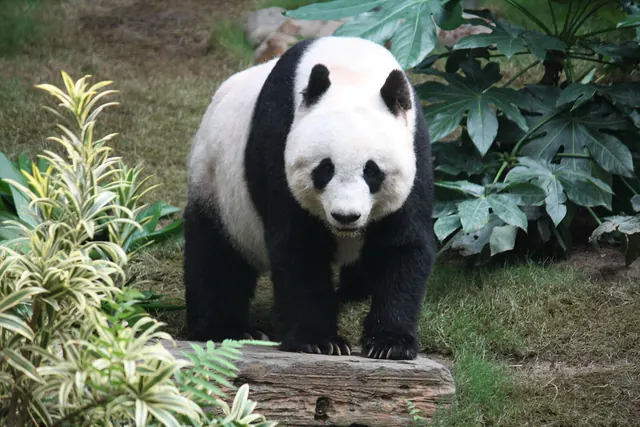
Scientists count wild giant pandas by combining systematic field surveys, DNA from droppings, camera traps and tracks, then estimating population from the evidence. Nobody can see every panda, so every figure is an estimate tied to a method and a date.
Why counting pandas is difficult
Giant pandas live in mountainous forest, often in terrain that is hard to reach. Many spend substantial time alone, and their black-and-white coats look similar at a glance. A researcher cannot simply stand at a viewpoint and count all the animals in a valley. Effective population estimation requires systematic fieldwork and careful decisions about evidence. The San Diego Zoo Wildlife Alliance population fact sheet describes distribution-wide national surveys as a key foundation for understanding wild panda populations. A survey is an estimate of animals in a defined landscape during a particular period, not a real-time counter updating whenever a panda is born. Readers should therefore check dates and methods when comparing population figures. Different methods may yield numbers that should not be compared casually.
Field teams first map signs and habitat
Researchers look for panda signs along planned routes through suitable habitat. Observations can include droppings, feeding traces and tracks, along with habitat measurements. A consistent sampling design matters because searching only easy trails or famous panda valleys would distort the picture. Teams record locations carefully so observations can be tied to a map rather than remembered as anecdotes. Dense bamboo, steep slopes and weather can make some areas difficult to sample. Even if a survey detects signs, the evidence may not immediately show how many animals produced them. One panda could leave several piles of droppings along a route; several pandas could use the same patch. The next challenge is turning signs of presence into a defensible estimate of individual animals and their distribution.
What panda droppings can reveal
Fresh droppings are valuable because they can contain biological material without requiring the animal to be caught. Researchers may use genetic markers to identify individuals, establish sex and assess population structure. In one published field study, scientists collected panda faeces along repeated transects, recorded their coordinates and used genetic analysis to identify individual pandas and study how they were connected. DNA tests require suitable samples, good laboratory procedures and quality controls. Not every collected sample produces a usable result. Genetic evidence is powerful, but it comes with laboratory costs and sampling challenges.
Read next



Can cameras identify individual pandas?
Motion-triggered cameras allow researchers to record wildlife without placing an observer directly beside each animal. They can reveal the timing and location of panda activity and document other species sharing the forest. Recognising one individual across different photos, however, is challenging. Pandas do not have individually distinctive stripes like tigers. Researchers have studied combinations of visible traits and careful image comparison to address this. A Journal of Zoology study explored a structured way to identify wild pandas from camera-trap photos. Such methods can expand the range of questions researchers ask, but a camera sighting does not automatically equal a new animal in the census. Repeated photographs of the same individual have to be accounted for when inferring population patterns.
Footprints offer another non-invasive clue
Panda feet leave tracks that can sometimes be documented without disturbing the bear. Researchers have tested the possibility of distinguishing individuals using features of footprint shape and trails. The 2018 Biological Conservation paper on footprints tested whether footprints can be used to identify and sex giant pandas. A footprint is affected by the ground and by how the animal stepped, so this approach requires systematic measurement and validation rather than casual visual guesswork. The advantage of developing multiple complementary tools is resilience: a place unsuitable for one technique may offer useful evidence for another. No single track, camera photograph or dropping should be treated as a complete population survey.
How population estimates inform protection
A total count matters less if nobody knows where animals are concentrated, whether groups are isolated and how habitat is changing. Surveys can identify corridors that deserve protection and areas where small groups risk being cut off from others. Genetic samples can illuminate connections between populations; repeated surveys can help reveal trends. The San Diego Zoo Wildlife Alliance fact sheet notes that populations are small and isolated in places, and that some subpopulations are at high risk of local extinction. Interpretation therefore needs both the big picture and local geography. A single headline number cannot explain every conservation challenge. Reliable monitoring helps managers judge whether habitat protection, restoration and connectivity efforts are working. For readers, the best way to evaluate a panda population claim is to ask who conducted the estimate, when the data were collected and what sampling method was used. It is also important to distinguish the number of pandas detected in one study area from the number estimated across the species' whole range. A camera-trap project in a reserve may provide exceptional local data without being designed as a national census. Changes in equipment, search effort and analytical methods can influence apparent trends. Strong population reporting explains these differences rather than presenting every new figure as a direct comparison with the last one.
Frequently asked questions
Can scientists count every panda directly?
Usually not; they combine field evidence and estimation methods.
Does one dropping mean one panda?
No, one individual can leave many.
Can DNA reveal individual pandas?
Suitable samples can be analysed genetically.
Are camera traps useful?
Yes, although recognising individuals is not always easy.
Why are old population numbers still quoted?
Large surveys take time, and the date of data collection may precede publication.
Related guides
Sources
- San Diego Zoo Wildlife Alliance: Giant panda population and conservation fact sheet
- Zhou et al.: Community structure of the solitary giant pandas is maintained by indirect social connections (noninvasive genetic sampling study, PMC)
- Using footprints to identify and sex giant pandas (Biological Conservation, 2018)
- Individual identification of wild giant pandas from camera trap photos (Journal of Zoology, 2016)
Cite this page
APA
PandasWise. (2026, November 16). How do scientists count wild giant pandas? https://pandaswise.com/blog/how-do-scientists-count-wild-pandas.html
MLA
"How do scientists count wild giant pandas?" PandasWise, 16 Nov. 2026, https://pandaswise.com/blog/how-do-scientists-count-wild-pandas.html.
Chicago
PandasWise. "How do scientists count wild giant pandas?" PandasWise. November 16, 2026. https://pandaswise.com/blog/how-do-scientists-count-wild-pandas.html.